
SPORTS BETTING AND COLLEGE ATHLETES: HEALTH RISKS AND INSTITUTIONAL DUTIES
Ronald J. Rychlak*
Sports betting has undergone a profound transformation in the past decade, and the health implications for college athletes must not be overlooked. Legalized mobile gambling has removed many of the difficulties that once inhibited the development of serious gambling problems.[1] Cell phones serve as portable casinos, and sportsbook marketing reaches gamblers when they are most vulnerable. For college athletes – whose daily routines already involve performance pressure, injury concerns, academic assignments, and constant scrutiny – this creates a hazardous set of conditions that colleges are confronting with increasing frequency.[2]
From a medical perspective, the concern is not over athletes placing occasional bets or whether gambling impacts contest outcomes. The problem is sports wagering often evolves in a way that mirrors other addictive disorders. So, an athlete who starts betting after practice or late at night in the dorm may feel a pull to gamble more. Cravings, loss of control, and chasing losses are well‑documented features of gambling disorders. College students are already overrepresented among problem gamblers,[3] and athletes, by virtue of their temperament and environment, are more likely than others to engage in gambling behaviors.[4]
For the past few years, I have been working with other professionals to examine gambling at Mississippi universities and colleges. In a statewide survey, we found that thirty-nine percent of college students reported gambling in the past year, and among those who bet on sports, six percent met the American Psychiatric Association’s diagnostic criteria for problem gambling.[5] This is particularly problematic for college athletes, as the criteria for problem gambling (tolerance, restlessness, repeated failed attempts to stop, preoccupation, chasing losses, concealment, and jeopardizing academic or personal relationships) manifest themselves in ways that directly impact their performance. The effects include missed classes, diminished recovery habits, reduced training quality, and declining engagement.[6]
One of the biggest problems when it comes to treating gambling disorder is detecting it. Unlike substance misuse, gambling problems do not leave physical markers, and the symptoms are often masked by substance abuse. The symptoms can also be mistaken for signs of ordinary stress, anxiety, or depression. Trainers, physicians, counselors, and even family members may encounter athletes who are exhibiting problematic signs without recognizing that compulsive betting is the underlying cause.[7]
Typical psychological consequences that stem from problem gambling include severe anxiety, depression, substance misuse, and family strain.[8] For athletes, the emotional burden is often compounded by shame, concerns about eligibility, and financial distress.[9] Those pressures can create a feedback loop in which the athlete’s response intensifies the very behavior that produced it.[10]
The risks, however, extend well beyond mental health. Chronic stress related to gambling (including mounting debt, secrecy, and the emotional volatility of wins and losses) can produce headaches, fatigue, indigestion, and impaired concentration.[11] For athletes whose rigorous schedules demand discipline and emotional regulation, these pressures can be traumatic.[12] The statistics show that roughly one in five pathological gamblers attempt suicide.[13] On a college campus, that is a mental‑health emergency.
Even in less serious cases, both athletic and academic performance can suffer. When gambling occupies cognitive space that should be devoted to preparation, recovery, and academic work, athletes may become distracted or disengaged from their sport and their schoolwork.[14] Over time, decision‑making ability can erode, motivation can decline, and relationships with teammates and staff can deteriorate.
Given these realities, institutions need to push beyond NCAA compliance and adopt a health‑centered approach to the problem of sports betting among athletes. Routine screening is essential, particularly for athletes who exhibit anxiety, sleep disruption, unexplained absences, or financial distress.[15] Athletic departments should ensure that coaches, trainers, academic advisors, and physicians are trained to recognize the signs of gambling disorders, just as they are trained to identify concussions, eating disorders, and substance misuse. The emphasis should be on counseling, treatment referrals, and education. Punitive responses are usually insufficient and often counterproductive.
Sports betting is, in every meaningful sense, a medical issue for college athletes. Universities must respond with the same seriousness they apply to other campus health threats, including education, clear policies, confidential counseling, and coordinated medical support. They should also ensure that institutional partnerships do not place betting brands in front of student-athletes or other students in ways that may threaten their well‑being.
The recent establishment of the University of Mississippi Center on Collegiate Gambling reflects a growing recognition of the problem. The center aims to deepen understanding of student gambling behaviors, from casual card games to proposition bets and prediction markets, and to support research that can guide the development of healthier, more responsible campus environments.[16] Other campuses should take note.
* Distinguished University Professor and Jamie L. Whitten Chair in Law and Government at the University of Mississippi. Professor Rychlak has served as the university’s Faculty Athletic Representative and chair of the University’s standing committee on Intercollegiate Athletics since 2007. From 2014-2025, he served as secretary of the Executive Committee of the Southeastern Conference. He is also a co-founder of the UM Center on Collegiate Gambling at The University of Mississippi.
[1] See Ronald J. Rychlak, Mobile Sports Betting on College Campuses: Limiting the Risks, 14 UNLV Gaming L.J. 25 (2023). Mobile sports betting is not legal in Mississippi, but in 2023 this author was a member of the Mississippi Legislature’s Mobile-Online Sports Betting Task Force, and legislative activity on this front continues. See Mississippi Legislature’s Mobile-Online Sports Betting Task Force Final Report (Dec. 15, 2023), https://www.peer.ms.gov/sites/default/files/publications/MobileSportsBettingReport_FINAL.pdf (last visited June 23, 2026).
[2] When University of Pittsburgh’s athletic director Heather Lyke testified before the U.S. Senate Judiciary Committee in 2020, she described gambling as “corrosive and detrimental” to student‑athletes and the broader student body. Anna Betts et al., A Risky Wager: How Colleges and Sports-Betting Companies ‘Caesarized’ Campus Life, N.Y. Times (Nov. 20, 2022), https://www nytimes.com/2022/11/20/business/caesars-sports-betting-universities-colleges.html (last visited June 20, 2026).
[3] According to the National Center for Responsible Gaming, “[t]he most recent research estimates that 6% of college students in the U.S. have a serious gambling problem that can result in psychological difficulties, unmanageable debt and failing grades.” Gambling, Partners in Prevention, https://www.mopip.org/pip/gambling/ (last visited June 24, 2026).
[4] See generally Gambling Participation and Attitudes, Nat’l Council on Problem Gambling , https://www.ncpgsurvey.org/mississippi/ [hereinafter Gambling Participation] (gambling activities include buying raffle or lottery tickets, sports betting, wagering money on racing, games, roulette, craps, etc.).
[5] Michael Goldberg, Mississippi College Students Bet on Sports Online Despite State Ban, Ole Miss Study Shows, Mississippi Today, (August 11, 2025) https://mississippitoday.org/2025/08/11/mississippi-college-students-sports-betting-online-study/, (reporting on the survey of nearly 1,600 Mississippi college students).
[6] Hector Colon-Rivera, What is Gambling Disorder?, Am. Psychological Ass’n (Aug. 2021), https://www.psychiatry.org/patients-families/gambling-disorder/what-is-gambling-disorder (last visited June 23, 2026).
[7] See Steve Inguanti, The Problem with Gambling, Words Note Nos. (July 3, 2018), https://wordsnotnumbers net/2018/07/03/the-problem-with-gambling/ (last visited June 23, 2026) (“Many people with problem gambling are missed because their symptoms are masked by other disorders and often hidden from practitioners…”).
[8] See Martha C. Shaw et al., The Effect of Pathological Gambling on Families, Marriages, and Children, 12 CNS Spectrums 615 (2007), https://www.cambridge.org/core/journals/cns-spectrums/article/abs/effect-ofpathological-gambling-on-families-marriages-andchildren/58D1EF6DE18E978872B1B97F1A8C8E6D.
[9] See Colin-Rivera, What Is Gambling Disorder?, supra note 6.
[10] Brendan Sorsby, in an affidavit submitted to the NCAA in his lawsuit challenging the lifetime ban for betting on games when he was a member of the Indiana University football team, said, “I justified making bets as a way to more connected to the team, to cheer for my friends, and to feel as though I had a ‘stake’ in games in which I was otherwise not involved.” See Justin Williams, Top Takeaways from Brendan Sorsby’s Lawsuit Against NCAA: ‘Truly Addicted to Gambling’, The Athletic (May 20, 2026), https://www.nytimes.com/athletic/7292874/2026/05/20/brendan-sorsby-gambling-ncaa-lawsuit/ (last visited June 23, 2026).
[11] American Heart Association, Sports Betting Has Changed. Could It Affect Your Health?, AHA News (Sept. 3, 2024), https://www.heart.org/en/news/2024/09/03/sports-betting-has-changed-could-it-affect-your-health9last visited June 23, 20260; Arvin Shaygan , et al., More Than Fun and Games: Problematic Sports Betting and Its Adverse Impact on Mental Health and Well-Being in Young Adults, 342 Psychiatry Res. 116258 (2024), https://pubmed.ncbi.nlm.nih.gov/39509763/ (last visited June 23, 2026).
[12] NBA Hall of Famer Carmelo Anthony explained that sports betting is putting growing psychological pressure on athletes and “changing the narrative of the game.” CNBC, Sports Gambling Affects Athletes Mentally, Says NBA Star Carmelo Anthony, (YouTube, Oct. 22, 2025), https://www.youtube.com/watch?v=sFWyiCeNwwE.
[13] Jon Doss, Problem Gamblers Have Highest Suicide Rate of Any Addiction Disorder, Studies Show, News 5 Cleveland (Sept. 9, 2021), https://www.news5cleveland.com/news/local-news/problem-gamblers-have-highest-suicide-rate-of-any-addiction-disorder-studies-show (last visited June 23, 2026).
[14] See CNBC, Sports Gambling Affects Athletes Mentally, Says NBA Star Carmelo Anthony, supra note 12.
[15] See generally Rychlak, supra note 1.
[16] The trustees of the Institutions of Higher Learning recently approved the Mississippi UM Center on Collegiate Gambling, which this author had a role in establishing. The center seeks to advance understanding of college student gambling behaviors ranging from card games to proposition betting and prediction markets through academic research. See Michael Goldberg, Ole Miss Announces College Gambling Center as Concerns Rise Over Addiction, Athletes, Associated Press (Mar. 24, 2026), https://apnews.com/article/old-miss-gambling-center-sports-betting-be2b966f9e0c39cc7f5bf99f5bbb7fc5 (last visited June 23, 2026).
MEET THE AUTHOR
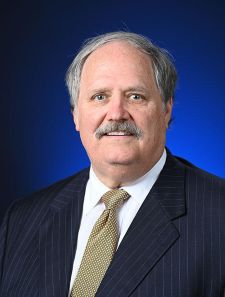 Ronald J. Rychlak is Distinguished University Professor and University of Mississippi School of Law’s Jamie L. Whitten Chair in Law and Government, where he has taught since 1987. A former Associate Dean for Academic Affairs and longtime Faculty Athletics Representative, he also serves as legal advisor to the Holy See’s Mission to the United Nations. Professor Rychlak is the author or editor of twelve books and more than 100 articles, with scholarship spanning criminal law, constitutional law, evidence, gaming law, and international law. His work has appeared in leading journals and national media outlets, and he is a frequent commentator on issues at the intersection of law, religion, and public policy.